What happens if one implant fails, with four and with six
It's the question many people really mean when they ask whether six is safer. Here's an honest answer.
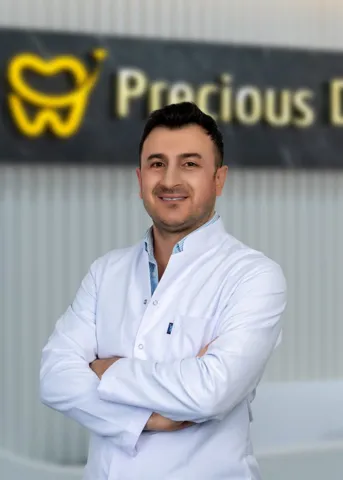 Medically reviewed by Dt. Hüseyin Yavuz Özbek, implant surgeon · Updated October 2026
Implant failure under a full arch is uncommon, but it happens. With four implants, losing one usually means the bridge can't safely be used on three, so you may need a temporary denture until a new implant heals. With six, the bridge may stay in use on the remaining five while the failed implant is dealt with. That reserve is one real advantage of six; it doesn't mean six fail less often.
Four implants: the bridge usually needs all four
A four-implant bridge is designed around four supports. If one fails, three are usually too few to carry a full arch safely, especially if the lost implant was at the back. What often happens:
- The bridge is taken off, and you wear a temporary denture or a modified bridge.
- The site heals, sometimes with a small bone graft.
- A new implant is placed and left to bond with the bone.
- The bridge is refitted or remade.
Six implants: often a margin to spare
With six, the bridge may stay in use on five while the failed implant is removed and, if needed, replaced. Whether that's safe depends on which implant failed and how the bridge is built, so your dentist decides. It's a real practical advantage: more chance of keeping your fixed teeth while the problem is fixed.
The reserve isn't the same as a lower risk. Six implants give you more margin if one fails. They don't mean an implant is less likely to fail. Large reviews found no significant difference in implant survival between four and six.
Why implants fail
- Early: the implant doesn't bond with the bone in the first weeks or months. Smoking, poorly controlled diabetes, and overloading the new teeth (chewing hard food too soon) raise the risk.
- Later: usually peri-implantitis, an infection of the gum and bone around the implant caused by plaque. The British Society of Periodontology summarised a large review: around 1 in 5 patients with implants develop it at some point, and a history of gum disease, diabetes and smoking are the main risk factors.
- Mechanical: a screw loosening or the bridge chipping is more common than losing an implant, and usually simpler to fix.
Lowering the risk, whichever you choose
- Stop smoking, ideally well before surgery
- Get diabetes as well controlled as you can
- Follow the soft-food rules while the implants heal
- Clean under the bridge every day and keep regular check-ups
- Wear a night guard if you grind
For a fuller guide to risks and day-to-day care, see allon6implant.co.uk. If you're having treatment abroad, also ask how repairs work once you're home; allon6turkey.co.uk covers aftercare back in the UK.
Common questions
How often do full-arch implants fail?
Uncommonly. Reviews report high implant and bridge survival with both four and six implants. Failure is more likely early, before the implant bonds to bone, and in people who smoke or have poorly controlled diabetes.
Can a failed implant be replaced?
Usually, yes. The area is left to heal, sometimes with a small graft, and a new implant is placed. Whether the bridge can be reused depends on its design and how it fits the new implant.
Does a guarantee cover a failed implant?
It depends on the clinic's terms. Read what's covered, for how long, and what you must do to keep it valid, such as check-ups. Ask who pays for travel if the repair has to be done abroad.
Sources
- Sharaf et al. (2024), Heliyon — Four or six implants for maxillary fixed prostheses: systematic review and meta-analysis
- Polido et al. (2018), Clinical Oral Implants Research — Number of implants placed for complete-arch fixed prostheses: systematic review and meta-analysis
- British Society of Periodontology — Research Corner: peri-implant diseases (AO/AAP systematic review)
- Oral Health Foundation — Understanding dental implants (peri-implantitis)
Checked October 2026. Where we give our own view as a clinic, we say so.
Only a scan can settle it.
Send us an X-ray or scan if you have one. A dentist will tell you which option suits your bone, and say so honestly if neither is the right step.