Success rates: what the research says about four and six
Plenty of websites quote success rates. Here are three systematic reviews that compared implant numbers, what they found, and what they can't tell you.
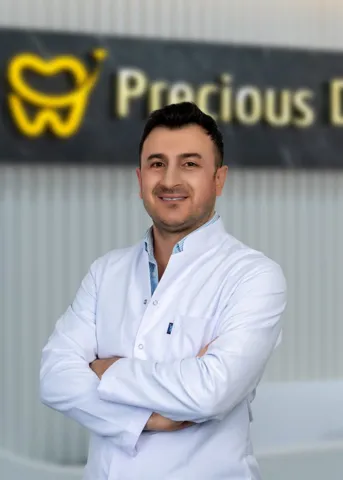 Medically reviewed by Dt. Hüseyin Yavuz Özbek, implant surgeon · Updated October 2026
Reviews of many studies have found no significant difference in implant or bridge survival between full arches on four and on six implants. One 2024 review of upper-jaw studies found more bone loss around implants with four, and suggested more implants may reduce complications. Few studies compared four and six directly, so the evidence supports "both work well when well planned" rather than one clear winner.
Review 1: 93 studies, upper and lower jaws (2018)
Polido and colleagues, writing in Clinical Oral Implants Research, pulled together 93 studies of full-arch fixed bridges, including nine randomised trials. They compared bridges on fewer than five implants with bridges on five or more.
- Finding: no significant difference in implant survival or bridge survival between the two groups.
- Follow-up: 1 to 15 years, median 8 years.
- Typical numbers: four in the upper jaw and three or four in the lower jaw for the "fewer" group; six in the upper jaw and five in the lower jaw for the "more" group.
Review 2: 53 studies, upper jaws only (2024)
Sharaf and colleagues, in Heliyon, looked only at upper-jaw full arches on four or six implants.
- Survival: no significant difference in implant or bridge survival.
- Complications: no significant difference in mechanical or biological complications.
- Bone loss: significantly higher around implants in the four-implant group.
- Their conclusion: more implants, as in the six-implant group, may reduce complications and bone loss. Computer-milled frameworks and spreading implants from front to back were linked with better implant survival in the six-implant group.
Review 3: studies with at least five years' follow-up (2018)
De Luna Gomes and colleagues, in the Journal of Prosthetic Dentistry, found no relationship between the number of implants and implant survival, bridge survival, complications or bone loss over 5 to 15 years. The Dental Elf summary points out an important limit: only two of the included studies were designed to compare implant numbers directly.
What this means for you
For four
A well-planned four-implant bridge has survival similar to six in these reviews. It's a well-researched option, not a compromise.
For six
In upper jaws, six was linked with less bone loss around the implants. Where bone allows, that's a reasonable argument for six.
- Few head-to-head trials. Most studies looked at one approach, not both side by side.
- Survival isn't the same as problem-free. An implant can survive with some bone loss or gum inflammation.
- Your own risks matter more. Smoking, diabetes, gum disease history and daily cleaning affect outcomes more than four versus six.
Be wary of single figures like "98% success" without a source, a follow-up period and a definition. We'd rather show you the reviews and their limits.
Common questions
What is the success rate of All-on-4?
Studies generally report high implant and bridge survival for well-planned four-implant full arches. Exact percentages vary by study, follow-up time and how 'success' is defined, so be wary of a single headline figure.
How long do All-on-4 and All-on-6 last?
The implants themselves can last many years with good care; there's no lifetime guarantee. The teeth on top wear and may need repair or replacement over time. The reviews here followed patients for up to 15 years.
Why do clinics quote different success rates?
Because studies differ in who was treated, for how long, and whether 'success' means the implant is still there or that it's problem-free. Ask what a quoted figure actually measures.
Sources
- Polido et al. (2018), Clinical Oral Implants Research — Number of implants placed for complete-arch fixed prostheses: systematic review and meta-analysis
- Sharaf et al. (2024), Heliyon — Four or six implants for maxillary fixed prostheses: systematic review and meta-analysis
- Dental Elf — Number of implants and full-arch prosthesis survival (summary of de Luna Gomes et al., J Prosthet Dent 2018)
- Oral Health Foundation — Understanding dental implants (no lifetime guarantee)
Checked October 2026. Where we give our own view as a clinic, we say so.
Only a scan can settle it.
Send us an X-ray or scan if you have one. A dentist will tell you which option suits your bone, and say so honestly if neither is the right step.